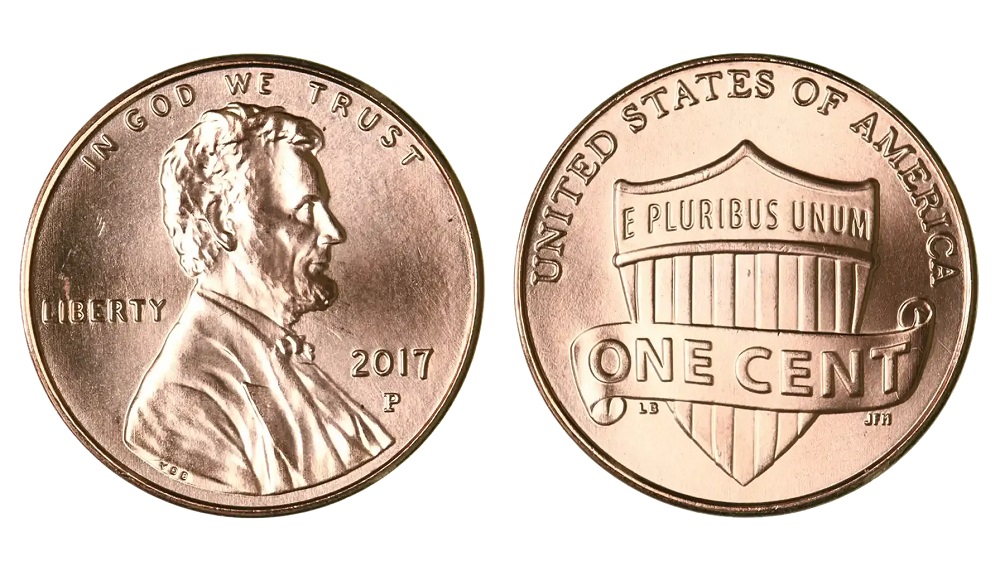
A 2017-P penny in MS68 RD has sold for $655 at auction — yet the very same coin in circulated condition is worth exactly one cent. The key to understanding 2017 penny value is the historic "P" mint mark (the first ever on a Philadelphia cent), your coin's grade, and whether you have one of the documented error varieties. Use this guide to find out exactly what yours is worth.
Check My 2017 Penny Value →Select your coin's mint mark, condition, and any known errors to get an instant value estimate.
Not sure of your coin's condition or mint mark yet? There's a free 2017 Penny Coin Value Checker online tool that lets you upload photos to get an AI-assisted identification before using the calculator above.
Is your 2017-P penny the real deal — the first Philadelphia cent in 75 years with a mint mark? Use this tool to confirm what you have and why it matters.
Got your self-checker result? Run it through the calculator to get an estimated dollar value for your specific coin's mint mark, grade, and errors.
Jump to any section:
Despite a combined mintage of over 8.6 billion coins, the 2017 Lincoln Shield cent series produced several well-documented error varieties. The historic "P" mint mark year makes these errors especially collectible — any dramatic striking error paired with the first-ever Philadelphia cent creates a doubly appealing numismatic artifact. Below are the five most important errors to look for, ranked by collectibility and confirmed market values.
The Doubled Die Obverse is the error variety that most collectors hunt first. It occurs when a working die receives multiple impressions from the hub at slightly different rotational angles, encoding the doubling permanently into the die steel. Every coin struck from that die carries the same doubling.
Identifying genuine DDO on a 2017 penny requires a 10× loupe and careful examination of the inscriptions. Look for clear split serifs or distinct secondary images on IN GOD WE TRUST, LIBERTY, or the date numerals — separation that is rounded and three-dimensional, not the flat shelf-like appearance of machine doubling, which adds no collector value.
Strong, easily visible doubled dies on the 2017-P are especially desirable because they pair a major error type with the historically significant first Philadelphia "P" mint mark. Premium examples with bold doubling and full red luster can reach well above the base range depending on the die state and grade. Certification from PCGS or NGC is strongly recommended before selling.
This is the single rarest documented 2017 penny error: a business-strike cent struck on a bronze planchet containing approximately 99.1% copper and 0.9% zinc — the alloy used for Lincoln cents before 1982 — rather than the modern copper-plated zinc composition. The resulting coin weighs approximately 3.1 grams instead of the standard 2.5 grams, a discrepancy easily detected with a precision gram scale.
Visually, the wrong-planchet specimen displays a distinctly warmer, more uniformly orange color compared to the thin copper-flash of a normal zinc cent. The coin's surfaces are denser and the strike can appear fuller, since the softer bronze alloy flows more readily into die recesses than zinc. A richer, more saturated orange-gold hue is the first visual clue.
This specific error has been certified by PCGS and sold through GreatCollections, making it one of the most thoroughly documented and verifiable major errors from the 2017 series. Because wrong-planchet errors require two separate production anomalies — a foreign planchet entering the cent feed and surviving to the press — they are exceedingly rare, with very few confirmed examples known from any modern Lincoln cent year.
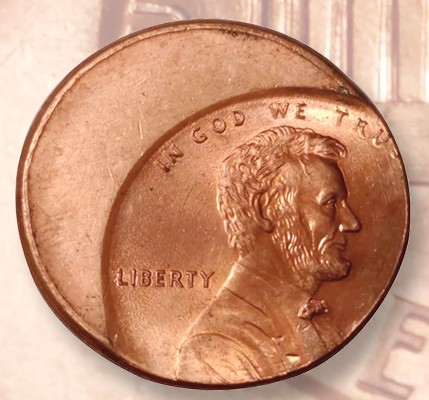
An off-center strike occurs when a planchet is not properly centered between the dies at the moment of striking, resulting in the design being displaced off-center and a corresponding crescent of blank metal appearing on the opposite side. The more dramatic the percentage of off-center displacement, the rarer and more valuable the piece generally becomes.
For a 2017 penny off-center strike to carry maximum collector premium, the full date "2017" must remain visible within the struck area — a coin that is 60% off-center but shows the complete date and the "P" mint mark is significantly more desirable than a deeply off-center example that obliterates the date entirely. The sweet spot most collectors target is 25–60% off-center with the date intact.
Off-center strikes on 2017 Lincoln cents are genuine mint production errors, not post-mint alterations. They are more dramatic visually than most other cent errors and appeal to a broader audience of error collectors. Combining an off-center strike with the historic "P" mint mark makes the coin doubly appealing for a type set of major U.S. cent errors.
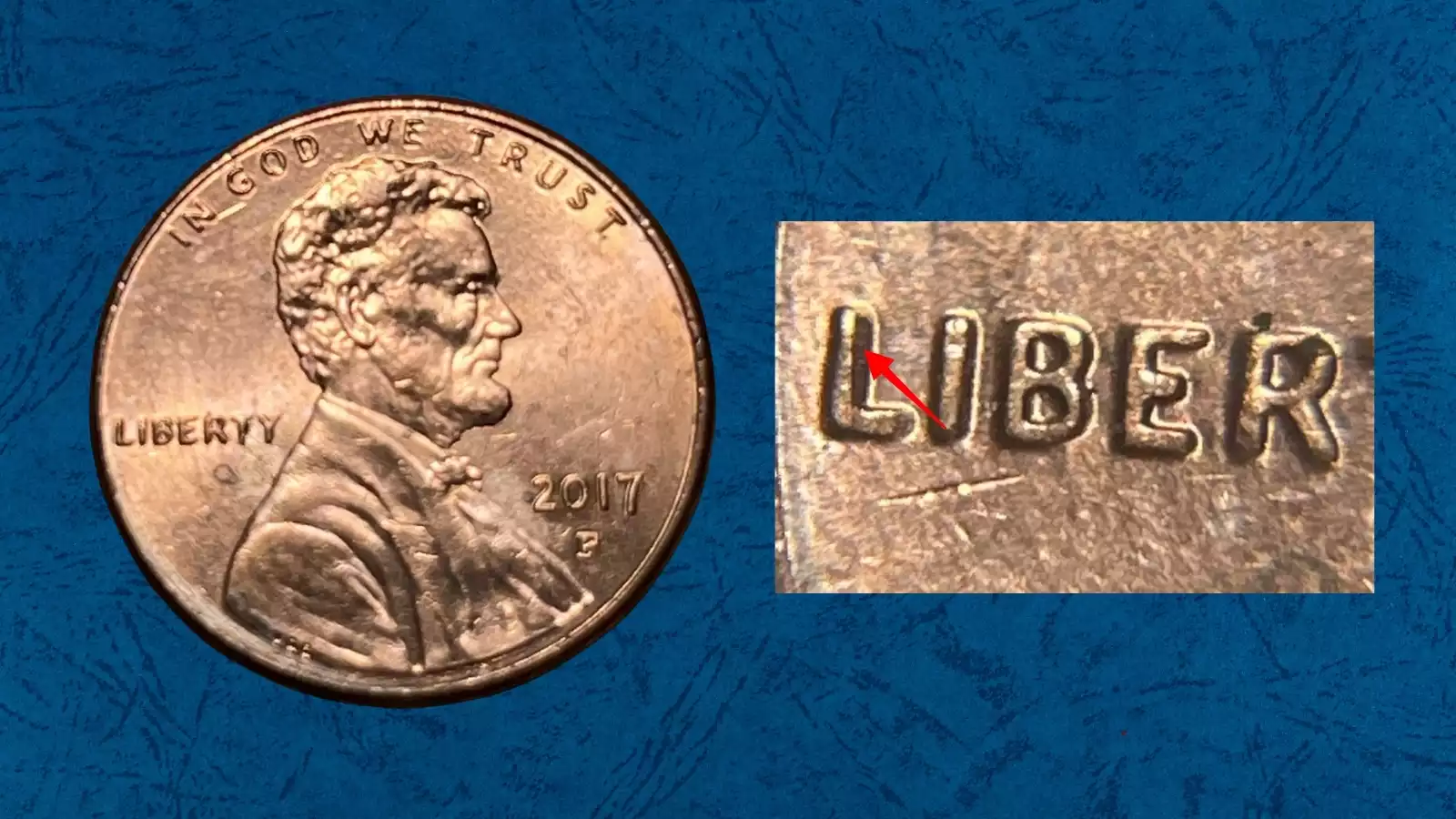
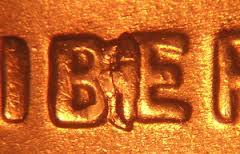
The BIE error is a Lincoln cent-specific die break variety named for the small raised metal blob that appears between the "B" and "E" in the word LIBERTY. It is caused by a crack or fracture that develops in the working die, allowing zinc to flow into the crack during striking and creating a raised feature on every subsequent coin from that die. The die designation BIE comes from the three letters surrounding the blob.
Minor BIE errors — small blobs barely visible without magnification — are relatively common across modern Lincoln cents and carry only a small premium. However, dramatic BIE examples with a large, well-defined lump, or full "cud" errors where an entire chunk of the rim and adjacent die face breaks away, are significantly scarcer and more sought-after. A full cud on a 2017-P cent creates a flat, unstruck area at the rim on every piece struck from the broken die.
On the 2017 cent specifically, a BIE die break gains extra appeal because it combines a Lincoln-specific variety type with the historic first-P mint mark. These pieces are well-documented in the error coin community and are legitimately die-specific, meaning all examples of a given BIE variety share exactly the same raised feature shape — a useful authentication point.
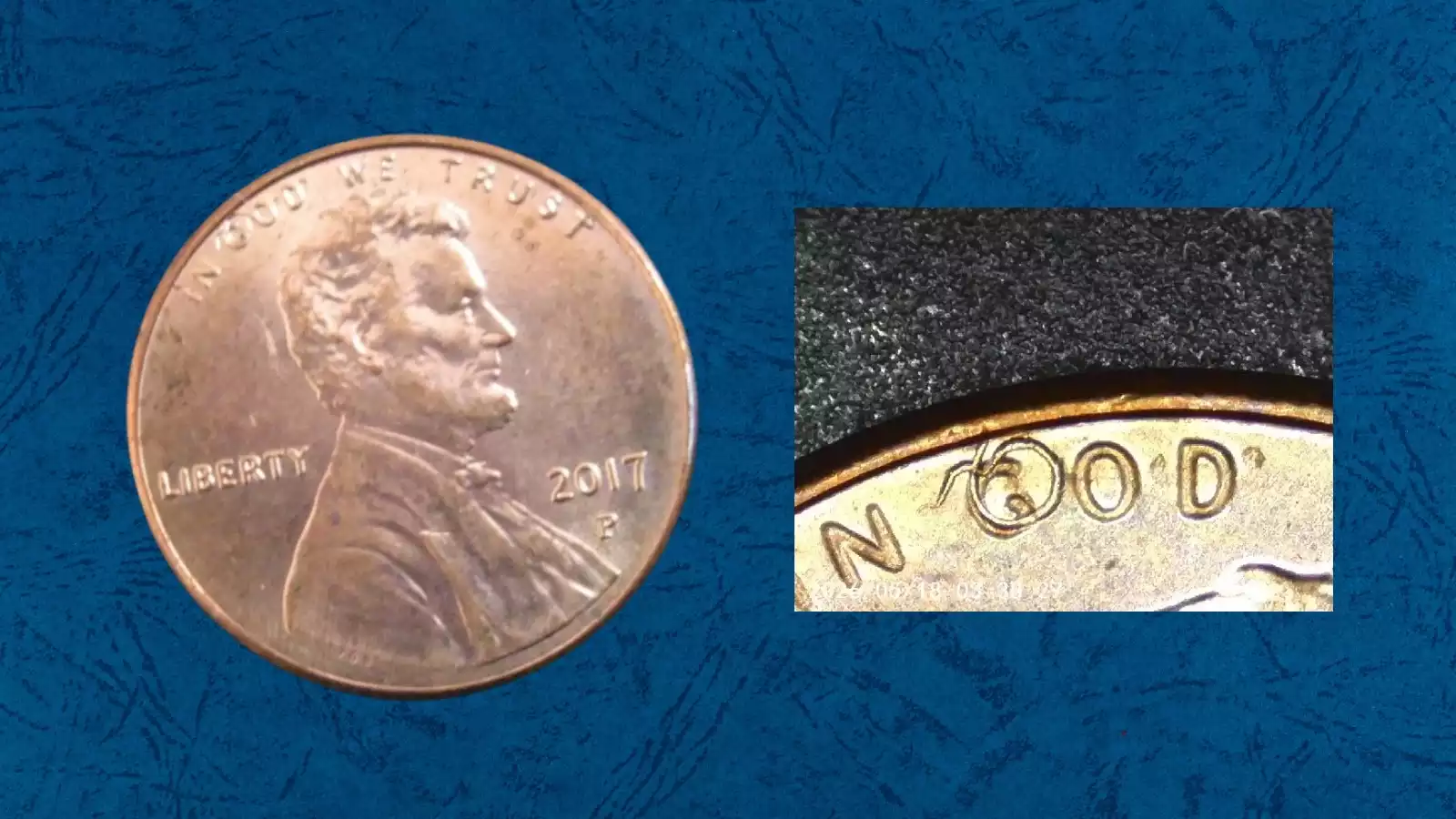
A struck-through error occurs when a foreign object — most commonly die grease, a cloth fiber, or a piece of debris — becomes trapped between the die face and the planchet at the moment of striking. The foreign material fills portions of the die cavity and prevents the flowing zinc from fully forming the design, resulting in missing, weak, or smeared lettering and design details in the affected area. Die grease is by far the most common culprit.
On 2017 Lincoln cents, struck-through grease errors range from minor (a slightly weak letter or two, worth $5–$10) to dramatic examples where entire inscriptions like IN GOD WE TRUST or LIBERTY are partially or fully obliterated, which can bring $25–$50 from struck-through specialists. The most collectible examples are those where the struck-through area clearly affects a recognizable and important part of the design in a visually dramatic way.
Struck-through errors are genuine mint production errors and not post-mint damage — the key diagnostic is that the affected area shows smooth, uniformly weak detail rather than the rough, scratched appearance of post-mint damage. They are documented for both the 2017-P and 2017-D cents. Eye appeal is paramount: a dramatically struck-through coin with clean, unimpeded surfaces elsewhere commands a premium over one with general wear.
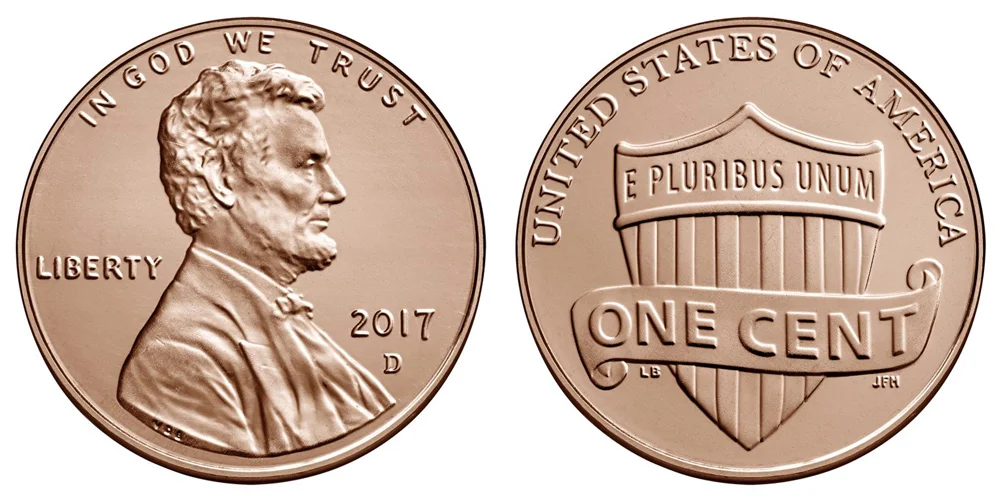
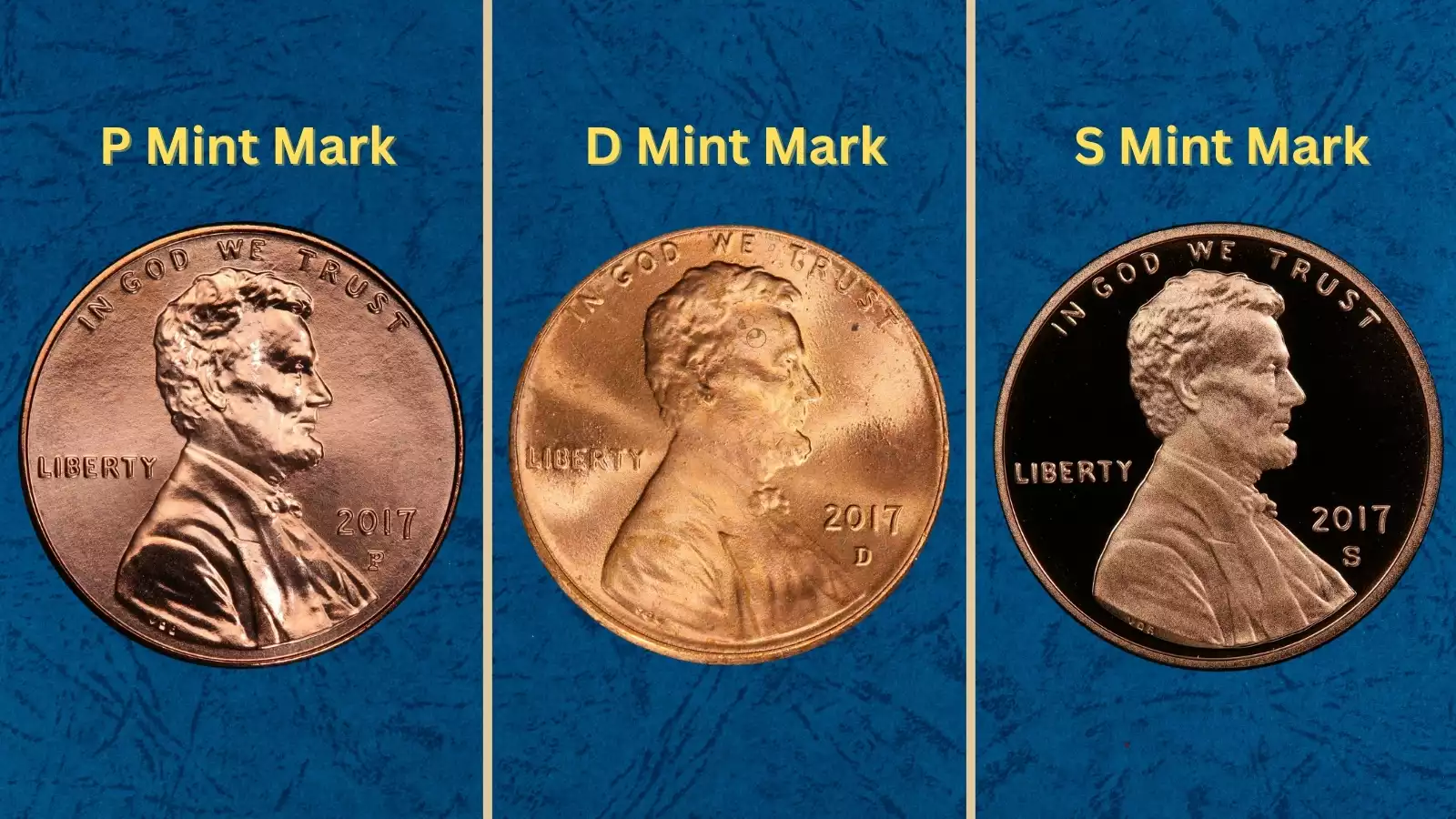
The 2017 Lincoln Shield cent was produced at three mints. Circulation strike mintages from Philadelphia and Denver were both in the billions — among the largest modern cent productions — while San Francisco struck only collector issues.
| Mint | Mint Mark | Type | Mintage | Key Fact |
|---|---|---|---|---|
| Philadelphia | P | Business Strike | 4,361,220,000 | Historic first "P" mint mark on a Lincoln cent |
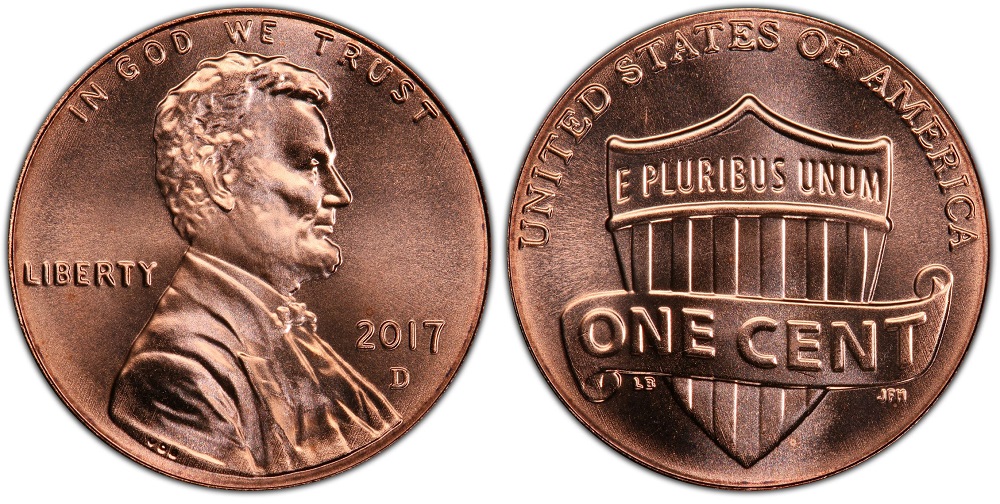
| Denver | D | Business Strike | 4,272,800,000 | Standard circulation issue; no special significance |
| San Francisco | S | Proof (DCAM) | 979,477 | Mirror-finish proof sold in annual Proof Sets |
| San Francisco | S | Enhanced Uncirculated | 225,000 | Key date — 225th Anniversary Set only; laser-frosted devices |
| Total (All Issues) | ~8,634,245,000+ | One of the highest-mintage single-year Lincoln cent series | ||
Run your specific coin's mint mark, condition, and any identified error through the calculator to get an instant value estimate tailored to your 2017 penny.
Calculate My 2017 Penny Value →Tell us about your coin in plain English and get a tailored assessment. The more detail you provide, the better.
For a full step-by-step 2017 penny identification walkthrough with photo examples covering every grade level, visit coinvalueapp.com. The chart below summarizes confirmed market value ranges based on PCGS auction data and population reports.
| Variety | Worn / Circulated | Uncirculated (MS60–66) | Gem (MS67–68 RD) | Top Grade / Special |
|---|---|---|---|---|
| 2017-P (First "P" Mint Mark) ⭐ | $0.01 | $0.25 – $30 | $20 – $655 | MS69 RD ~$1,495 |
| 2017-D (Denver) | $0.01 | $0.25 – $30 | $20 – $500+ | MS68 RD ~$1,380 |
| 2017-S Proof DCAM | N/A | N/A | $1 – $32 | PR70 DCAM $95 – $190 |
| 2017-S Enhanced Unc. (225K) 🔴 | N/A | N/A | $15 – $85 | SP70 RD $85 – $100 |
| 2017-P/D DDO Error | $0.01 | $25 – $75 | $50 – $150+ | Bold/Gem: $150+ |
| Wrong Planchet (Bronze) | N/A | $500+ | $1,000 – $3,000+ | PCGS-certified examples |
⭐ = Historic signature variety (first P mint mark). 🔴 = Key date by mintage (lowest regular issue). Values based on PCGS auction records and population data. Circulated examples of all business strikes are worth face value. Certification required for premiums above ~$10.
📱 CoinKnow lets you snap a photo of your 2017 penny and instantly estimate its value on the go — a coin identifier and value app.
Grading is the single most important factor determining your 2017 penny's value. The difference between MS67 RD ($20–$40) and MS68 RD ($350–$655) is a single point on the Sheldon scale — but hundreds of dollars in real-world value.
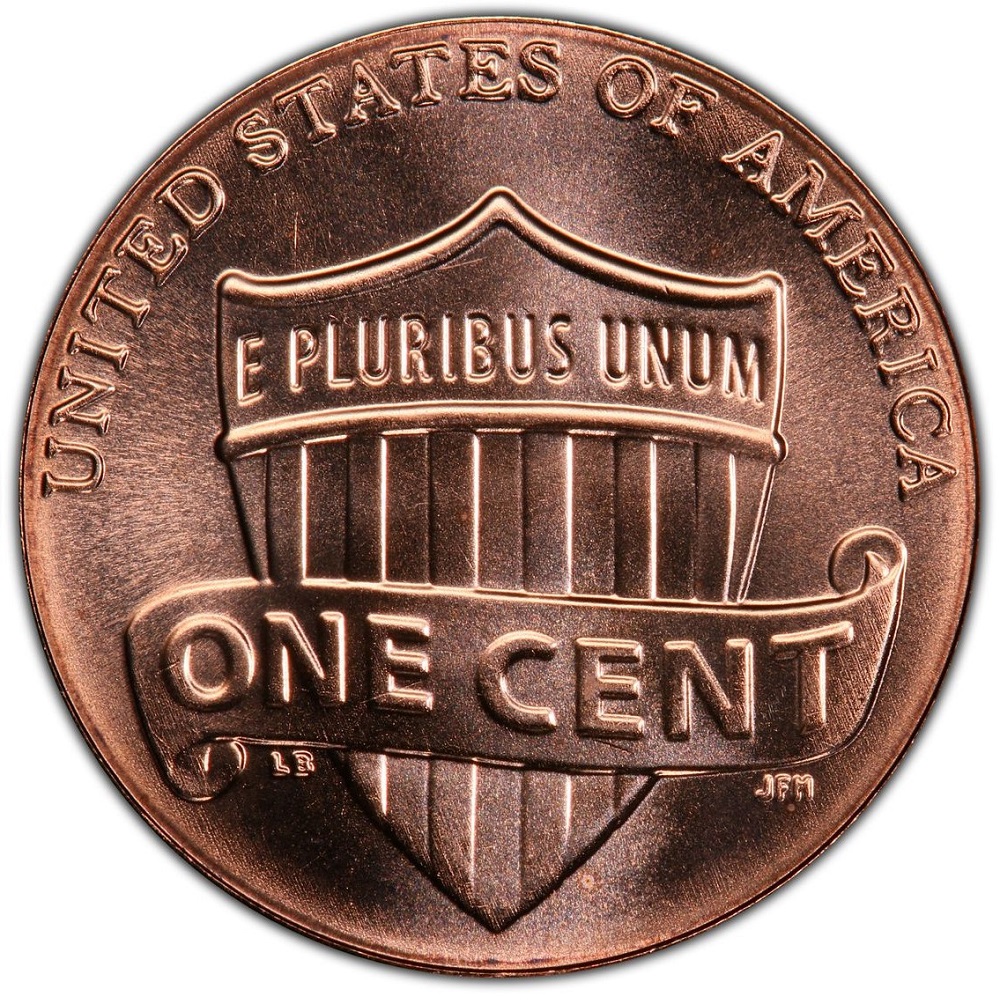
Any coin that has left the mint and circulated in commerce. Lincoln's cheekbone, jawline, and the high points of the Union Shield stripes show flatness from contact with other coins and surfaces. These 2017 pennies are worth exactly $0.01 — face value — regardless of mint mark. There are billions of them.
No wear, but noticeable contact marks, bag marks, or luster breaks from contact with other coins in mint bags. These are common in rolls and sets. A 2017-P in MS64 RD is worth roughly $1–$5. At MS63 or below, most examples bring only a few cents above face value unless they are from San Francisco.
Strong original luster, minimal contact marks visible only under magnification, and bright red color. MS65 RD examples of the 2017-P typically bring $5–$10; MS66 RD brings $10–$30. These are the grade levels most accessible to beginning collectors pursuing a complete date set without breaking the bank.
Exceptional luster, full original red, and only minuscule imperfections detected under 10× magnification. MS67 RD brings $20–$40 for the 2017-P; the much rarer MS68 RD has sold for $350–$655 in recent transactions. Only 38 PCGS-certified examples at MS68 RD exist as of early 2025. Even a single tick mark in the open fields can drop a coin from MS68 to MS67.
🔍 CoinKnow helps you cross-check your coin's condition against graded examples from a handheld photo — a coin identifier and value app.
Only coins grading MS67 RD or higher — or documented error varieties — are worth selling individually. Circulated examples are worth face value. Here are the best venues for premium 2017 Lincoln cents.
Best for certified MS68 RD, Enhanced Uncirculated SP70, or dramatic major error coins worth $200 or more. Heritage reaches the widest audience of serious numismatists and consistently achieves strong hammer prices for top-grade modern Lincoln cents. Expect a 20–25% buyer's fee on the sale price; plan your reserve accordingly.
The most practical venue for MS65–MS67 RD examples and lower-value error coins. Check recently sold prices for 2017-P Lincoln cents on eBay to benchmark your coin before listing. Use "Sold Listings" to see real transaction prices, not just asking prices. Always photograph all sides under good lighting and specify the PCGS/NGC grade if certified.
Convenient for quick sales but expect 30–50% below retail prices since dealers need margin. A good option for selling a small roll or collection of raw uncirculated 2017 pennies without the hassle of individual listings. Call ahead — most dealers won't pay a premium for uncertified modern cents below MS67.
An active community of collectors who buy directly from other collectors, often at prices closer to retail than dealer bids. Good for MS65–MS67 raw coins sold to enthusiasts building type sets. Post clear photos, be honest about condition, and expect questions about whether the coin has been cleaned or stored properly.
Use the free calculator — enter your mint mark, condition, and any errors — and get an instant value estimate in seconds. No signup, no waiting.
Check My 2017 Penny Value →